What Makes the Good Stuff “Good”?
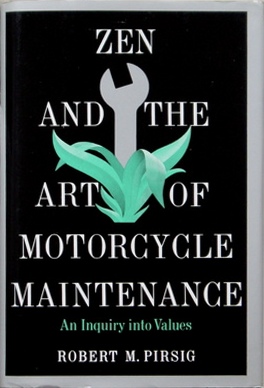
Quality is a hard thing to wrangle. (Robert Pirsig’s Zen and the Art of Motorcycle Maintenance was an attempt to figure it out.)
 We know it when we see it, but getting from A to G either takes a leap of faith, or relies on assumptions we never truly examine.
So I am challenging them.
There’s a lot of noise on the internet, and it’s getting even noisier. Finding the right melody among the din will become even harder. Unless, of course, you just happen to have a larger amplifier and can shout across the top of everyone else.
So what makes the good stuff “good?” And how can you build for it?
The Recipe
When it comes to online content, I have a hunch about the ingredients, but I’m not sure yet how you mix them.
- Is it fresh?
 Content that is new does typically carry more value than content that is old, but the truth is that people aren’t always ready to hear what you have to say. Walt Whitman can still be “fresh” if you’ve never been exposed to him before, or weren’t mature enough to grasp his points.
 - Is it surprising?
When everyone is saying the same thing, you will never stand out. “Everyone” is wrong often enough that you can carve out a niche as one who questions prevailing wisdom. - Is it universal?
When you write something that connects with everyone on a fundamental level, you’ve tapped into something powerful. When you write a detailed explanation about how to disguise a Cover-4 defense as a base Cover-2, you’re not really touching the human spirit. (Which is how I feel about a lot of “how-to” articles about SEO…) - Is it common?
There’s no need to be the 400th blog about Human Resources Recruiting. But there is a need to be the first blog about Recruiting for Dangerous Jobs. - Is it challenging?
Are you placating your audience with platitudes and filling space? Or are you getting them to “think up” with your subject matter, presentation and vocabulary? Make them feel like they know more for having visited, and they will want to come back. [This is one of my beefs with Seth Godin. He’s great when he challenges, not so great when he doesn’t.] - Is it accessible?
Are you presenting your ideas in ways that people can identify? Are you presenting the ideas in multiple ways, to reach people who learn in different modes? Are you building your content so those multiple modes reinforce each other? Or are you writing for the same crowd you always have? - Is it findable?
Are you writing in places where people are reading? (Popularity does matter to some extent.) Are you sharing the content in the places where it will do the most good? Are you indexing it properly, and using the right words to describe the concepts? Is the title really descriptive, or just cute? (My personal downfall.) - Is it well-written?
Did you put as much effort into bringing concepts full-circle? Have you been conscious about themes and mixing of metaphor? Hell, did you get the grammar right?
The Mixing Bowl
 Okay, so I have a rough idea about what goes into “Quality” online… but I don’t know how to weight it. A little bit of baking powder makes the pancakes rise, too much makes it unpalatable. And all of the attributes above impact how we perceive “Quality,” but some do matter more than others.
So tell me.
In the arena of Online Content, which attributes did I leave out?
And of the attributes of Quality, how would you weight them? Is accessibility more important than being well-written? Is commonality more crucial than surprise?

Initially, I was going to add “Is it funny?” to the list, but that isn’t quite what I mean. I guess what I mean is “Is it presented in an engaging way? Because the best information in the world, if it is just presented in a dead-pan, or monotone manner and style is probably not going to be something I’ll re-tweet, like on FB, or send links to all my friends about.
People like you and Steve Crescenzo regularly provide content that includes humour and a bit of quirkiness in your delivery which adds that elusive “something” to your already thoughtful and intelligent key points. It’s that quirkiness that will inspire me to tell all my friends they need to read your stuff rather than just moving on to the next article or post.
Hi Occam,
as a cook myself I would have to say it is all in the balance. The same ingredients cam make several dleightful diskes but canalso end in disaster if not put together in some sort of order.
As with Zen, it is all about balance and patience.
Thanks for all that food for thought.
I get a feeling your definition of Quality content and mine is not quite the same.. pun intended; but since we are here let me share you my playful and reduced meaning by falling back on my internetz and gaming experience: Quality is leetness (or 1337 or Über or gosu! which ever synonyms you prefer). i.e. in the internetz & gamer world leet implies achieved both with supreme skill and competency which will invariably be recognized and evoke awe in others (no matter how inaccessible, lost, old, etc…).
Even in physics, quality has several specific different meanings. In business and art, uff… the sky is the limit with this conditional and somewhat subjective characteristic that more often than not is understood differently by different people, in other words what my be Quality content to me may not be to you (it’s in the eye of the beholder, perceptual etc.. bla ya da da.. you know all this anyway, wikipedia’s definition lol). Which is why accessible and universal might be debatable attributes, e.g. for me http://www.edge.org/ has a lot of Über quality content but I can guarantee you for many it is not accessible and in many cases not universal. Another more exaggerated example: http://www.teamliquid.net/ is full of Quality content but I doubt most would agree.
So getting back to my original train of thought (sorry wine tonight, which explains the verborhagia) quality content is that content which was created with skill and competency. I think the attributes you mentioned can either be crossed out or belong tacitly. Now with dynamic content it needs one more characteristic to be quality, it needs to improve over time (e.g wikipedia, it is quality! or even 4chan as an exaggerated example, it is the cesspool of the internetz and so “full of fail” that is has become quality).
Adding blunt advertising in general is a quality minimizer with very few exceptions (i.e. when the advertising is so sneaky, sublime or amazingly targeted it becomes leet).
Anyways a serious answer now:
“In the arena of Online Content, which attributes did I leave out?”
Is it Link-worthy! (or favorites-worthy!)
Is it durable, enduring, continuing? I can’t find the exact word but it is in there, “relevant/valuable over time” I think is what I want to say i.e. the value of the content stays the same or it increases over time (this includes keeping it online until at least it is discovered and propagated!)
And of the attributes of Quality, how would you weight them?
Though one. It is hard to rate them if we don’t identify them all – let us see if we agree on more suggested attributes before we start rating them. Intuitively I think leetness is the top attribute : ) –
I hope in the above barrage of nonsense you find something useful!