 PC Magazine columnist John Dvorak is in a tizzy about the “Dumbing Down” of our society, thanks to journalists who think we are morons. A recent article about the cracking of the AACS encryption code didn’t properly refer to the hexadecimal code used:
An online uproar came in response to a series of cease-and-desist letters from lawyers for a group of companies that use the copy protection system, demanding that the code be removed from several Web sites.
Rather than wiping out the code—a string of 32 digits and letters in a specialized counting system—the legal notices sparked its proliferation on Web sites, in chat rooms, inside cleverly doctored digital photographs and on user-submitted news sites…
Dvorak’s “chief beef” is that the Times must think we’re all too stupid to not know what hexadecimal code is (or those that don’t can’t learn by context.) He has personal experience with these editorial decisions:
“Having written for many newspapers—The Times included—I cannot tell you how often editors have balked at using the term hard disk. Forget about terms like gate array. And only recently has RAM been accepted.“
My concern is that we’re locking ourselves into the notion that we must write for only one audience at a time. Good writing makes a point. Great writing is layered enough to inform those at a high baseline, and raise the bar for those who aren’t quite there. It’s a skill that becomes even more important in a medium like the web, where we can’t expect everyone to follow the linear path. If you’re reading an article online, it’s no bother to pop to a different window and look up something on the side. (Or to roll over the acronym you didn’t know, to see if there is a tooltip.)
It’s hard to build an audience by talking down to it.
[tags]Ike Pigott, Occam’s RazR, John Dvorak, hexadecimal, New York Times[/tags]

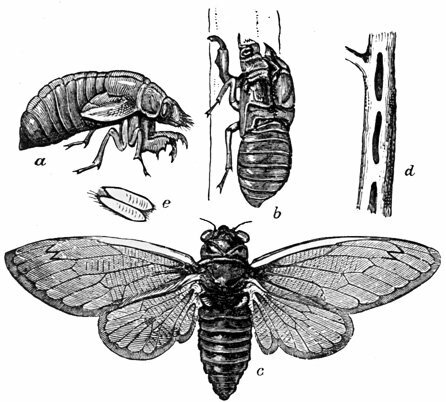 It’s simply a matter of evolution and adaptation. It’s a survival strategy. Burst forth in giant numbers, and predators will never be able to eat your species to extinction. However, if you emerge from your slumber every year, your predators can adapt their numbers to enjoy a regular lunch. If you pop up every other year, you’ll be a meal for every predator with an even-year cycle of its own.